

How often do you feel like not belonging to the group you’re part of? Do you enjoy engaging with people one-on-one but dislike group chats? Do you prefer having one meaningful conversation over multiple small talk exchanges? Do you feel like an outsider even when others include you? If so, you might be an “otrovert”—a personality type that is gaining recognition worldwide.
Is it okay to be different?
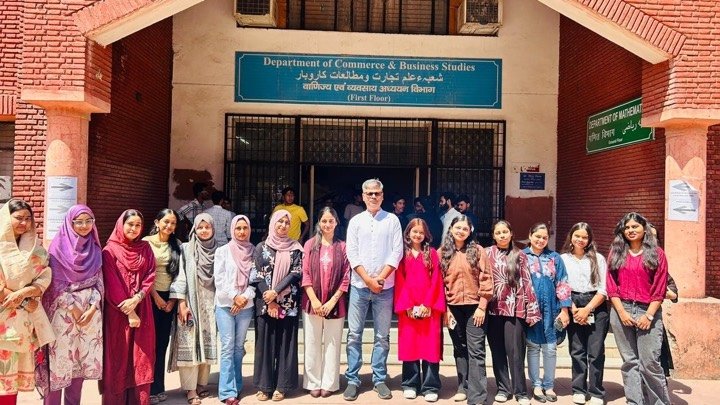
We often say, ‘it’s okay to be different’, but do we really appreciate that anyone pleading to be different yet remains productive of all sorts of ways? The lure to box someone or all within specific cohorts deemed appropriate is insurmountable. In the office ecosystems, being “friendly” often means being present everywhere—at meetings, lunches, and WhatsApp groups. Otroverts don’t dislike people; they dislike forced belonging. Take the case of a Chennai-based chartered accountant who avoids team outings but mentors juniors passionately. “I connect better one-on-one,” she says. “Crowds exhaust my thinking.” Similarly, in the classroom, teachers often notice students who avoid raising their hands but submit exceptional written answers. These students aren’t disengaged—they simply learn differently. In our formal education system, marks and grades are increasingly linked to class tests, presentations, group work, and peer interaction. Yet educators quietly admit that some of their brightest students prefer independent assignments and reflective learning. In my journey of two decades as a teacher, I have realized that some students think best when left alone, yet collaborate effectively when needed—without emotional investment in group dynamics.
Psychologists indicate that the understanding of this term is continually developing, offering reassurance to many that non-conformance doesn’t imply there’s something wrong. It’s important to recognise that while the idea of belonging is often exalted, authenticity holds greater significance. The crucial question is: Why are an increasing number of people feeling a lack of belonging, and how might this feeling actually represent a significant strength? In Indian culture, the concept of belonging is essential. Whether in school, the workplace, or within families and neighbourhoods, our identities are profoundly influenced by the groups and communities around us. We value collaboration, social connections, and collective engagement. Yet, many individuals silently grapple with a sentiment they seldom express: “I may be part of the group, but I don’t feel like I truly belong.” They are neither shy nor socially inept; they engage, contribute, and perform admirably. Nevertheless, there remains a sense of difference.
Psychology may now have a name for them: the “otroverts.”
Beyond Introvert and Extrovert
For years, discussions of personality in academia have revolved around introverts and extroverts. Introverts are often misunderstood as “quiet” or “reserved,” while extroverts are praised as “confident” and “people-oriented.” Later, the idea of the ambivert gained popularity — someone who balances both tendencies. But the concept of the otrovert challenges this familiar spectrum. Derived from the Spanish word otro (meaning “other”), the term was popularised by American psychiatrist Dr. Rami Kaminski in his 2025 book The Gift of Not Belonging: How Outsiders Thrive in a World of Joiners, who studied this particular personality type for over thirty years. Otroverts are not defined by how much they speak or socialise, but by how they relate to the idea of belonging itself. They often feel like outsiders even when accepted — not due to rejection, but because their identity does not depend on group affiliation. The interesting fact of the matter is that the otroverts don’t struggle with people; they struggle with fitting themselves into boxes.
In the context of social intelligence, this idea strikes a deep chord. Think of the student who excels academically but feels disconnected from peer groups. The professional who performs brilliantly in teams but avoids office politics. The academic, artist, or thinker who respects tradition yet refuses blind conformity. Indian society strongly values adjustment, social harmony, and collective identity. While these are cultural strengths, they can leave little space for individuals who prefer autonomy over affiliation. Otroverts are not anti-social. They simply do not derive their sense of self from crowds, labels, or group validation.
Emotional Intelligence, the Quiet Way
Much of today’s discourse celebrates emotional intelligence as expressiveness, networking, and interpersonal visibility. But emotional intelligence also includes self-regulation, emotional boundaries, and authenticity — areas where otroverts often excel.
They tend to:
- Reflect deeply before reacting
- Avoid emotional contagion in groups
- Form strong, selective emotional bonds
- Remain calm amid social pressure
In the classrooms and workplaces, where assertiveness is increasingly equated with competence, such emotional styles are often overlooked. However, must we not forget that not everyone who stays silent is disengaged; some are simply thinking more deeply.
Learning, Thinking, and the Otrovert Mind
Personality significantly influences how people learn, and one of the facets of personality that has garnered attention is the concept of the Otrovert mind. Otroverts, who tend to prefer introspection and independent thought, often excel in specific learning environments that resonate with their cognitive styles. They thrive in settings that prioritise independent or research-oriented learning, where they can immerse themselves in subjects at their own pace. Furthermore, small-group or one-to-one discussions allow them to express their ideas and engage in thoughtful dialogue without the overwhelming pressure of large group dynamics. This aligns with the theories of constructivist learning, in which knowledge is constructed individually or in small collaborative groups, fostering a more supportive space for deep engagement. Tasks that incorporate writing, analysis, and reflective practices are particularly beneficial for Otroverts since these activities encourage them to articulate their thoughts and develop a nuanced understanding of complex concepts. The emphasis on conceptual and critical thinking also supports their strengths, as they often naturally gravitate towards exploring underlying principles and questioning established norms.
However, highly participative classrooms and meeting-heavy workplaces may inadvertently marginalise Otroverts, leading to disengagement. This scenario has significant implications, especially in the context of Indian education, which is transitioning toward more collaborative and experiential models. While these approaches promote social interaction and teamwork, it is crucial to recognise and accommodate cognitive diversity. Inclusivity must extend beyond visible participation; it should embrace different learning styles and preferences to create an environment where all students can thrive. Acknowledging the varied ways individuals process information not only enhances learning outcomes but also fosters a more equitable educational landscape.
India’s Quiet Outsiders: How Standing Apart Has Shaped Great Ideas
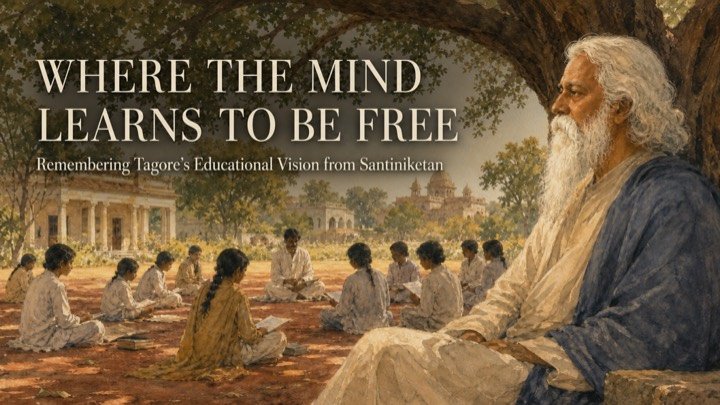
India’s intellectual and cultural history is replete with figures who never fully belonged to the mainstream of their times, yet profoundly transformed it. Gurudev Rabindranath Tagore, for instance, remained uneasy with institutionalised nationalism and rigid schooling, choosing instead to imagine an alternative vision of education at Santiniketan—one that initially appeared eccentric but later gained global respect. Dr. B. R. Ambedkar, despite being central to the making of modern India, stood apart from dominant social and political elites, questioning deeply entrenched caste hierarchies even when such positions invited isolation rather than approval. In science, C. V. Raman pursued independent inquiry outside established Western research centres, often resisting academic conformity, yet his solitary intellectual persistence led to India’s first Nobel Prize in Physics. Writers such as Mahasweta Devi or U. R. Ananthamurthy similarly occupied uncomfortable spaces, remained iconoclasts and critical of both tradition and orthodoxy, while choosing moral and intellectual autonomy over easy acceptance.
These individuals were not outsiders because they lacked social ability or influence; they were outsiders because they refused to dilute their thinking to fit dominant currents. In this sense, what is now described as otroversion simply offers contemporary language for a long-recognised but rarely articulated disposition in Indian life—the capacity to engage society while remaining inwardly independent. It must be acknowledged that otroversion is not yet an established psychological category and lacks empirical validation on a large scale. Critics may rightly argue that it repackages existing personality traits. Yet concepts serve not only scientific classification but also self-recognition. In a society that repeatedly urges individuals to adjust, align, and conform, recognising the legitimacy of standing apart can be deeply affirming—and, as history suggests, quietly revolutionary.
Embracing the Otrovert: Finding Strength in Margins
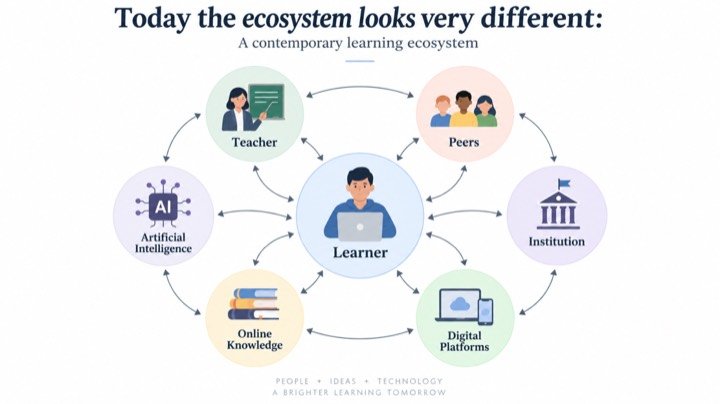
As society becomes increasingly globalised, competitive, and performance-focused, the pressure to conform intensifies across social, emotional, and professional domains. The concept of the otrovert subtly challenges this pressure by reminding us that belonging is not the sole avenue for contribution, that silence does not equate to absence, and that independence does not imply isolation. Often, the most influential voices are those that observe from the periphery. It is essential to recognise that progress frequently originates from individuals who feel a moderate sense of belonging—neither too much nor too little. In our pursuit of innovation and growth, we must acknowledge the valuable insights gained from diverse experiences. The otrovert flourishes within this space, leveraging the wisdom acquired through reflection rather than direct action. By appreciating silence and solitude, we foster a deeper understanding of our environment, which in turn enables us to contribute in distinctive ways. As we confront the intricacies of contemporary life, embracing individual differences can facilitate collaborative success. It is vital to establish an ecosystem where every voice is acknowledged, valued, and respected, irrespective of its prominence. Such an approach promotes an inclusive culture, harnessing the potential of the otrovert—those operating beyond mainstream paradigms—to inspire change and advance progress. Respecting these varied contributions not only enriches our communities but also lays the groundwork for a more innovative and resilient future.
[Should you like to explore further, pl read Mukherjee, D., & Islam, M. (2026). OTROVERSION: RETHINKING SOCIAL ENGAGEMENT BEYOND THE INTROVERT–EXTROVERT DICHOTOMY. Veredas Do Direito, 23(6), e235792. https://doi.org/10.18623/rvd.v23.5792]